Organizations rely on dozens, sometimes hundreds, of SaaS applications to run daily operations. CRM systems, project management tools, finance platforms, HR tools, collaboration apps, and analytics platforms all contribute to a growing SaaS ecosystem.
However, without a structured process to manage these tools, companies may face problems like shadow IT, license waste, security risks, and uncontrolled spending. SaaS life cycle management provides a framework to discover, control, optimize, and govern SaaS applications across their entire life cycle—from evaluation to offboarding.
This guide explains the SaaS life cycle management process, stages, benefits, best practices, and implementation strategies.
SaaS life cycle management is the process of managing SaaS applications from discovery and procurement to usage monitoring, optimization, renewal, and offboarding.
It helps organizations maintain visibility, governance, cost control, and security across all SaaS tools used by employees.
A typical SaaS life cycle includes:
Instead of managing SaaS applications manually across different teams, SaaS life cycle management platforms centralize the process into one unified system.
SaaS adoption has grown rapidly across organizations. Many companies now use 100+ SaaS applications across departments.
Without proper life cycle management, this creates several operational risks.
Organizations often pay for unused licenses. Life cycle management helps track usage and eliminate unnecessary subscriptions.
Unauthorized applications can expose sensitive company data. Life cycle governance ensures that all tools meet security requirements.
Employees frequently adopt tools independently. Life cycle management provides visibility into every SaaS application used across the organization.
Automated workflows streamline onboarding, license provisioning, and application management.
Many industries require strict access controls and audit trails. Life cycle management helps enforce compliance policies.
SaaS life cycle management transforms SaaS from a scattered collection of tools into a governed, optimized ecosystem.
An SaaS life cycle management platform should provide end-to-end visibility, automation, and governance across all SaaS applications.
| Feature | Why it matters |
|---|---|
| SaaS discovery | Automatically detects all SaaS apps used in the organization |
| License management | Tracks active users and unused licenses |
| Usage analytics | Identifies adoption patterns and inactive accounts |
| Access control | Manages user permissions and roles |
| Automated onboarding or offboarding | Provisions or revokes user access automatically |
| Renewal tracking | Alerts teams before contract renewals |
| Security monitoring | Detects risky or unauthorized apps |
| Integration support | Connects with identity providers, finance systems, and HR tools |
These capabilities help IT teams manage the entire SaaS life cycle from a single platform.
The SaaS life cycle consists of multiple stages that help organizations control applications from initial discovery to retirement.
SaaS discovery is the process of identifying all SaaS applications used across the organization, including those adopted without IT approval.
Discovery methods include:
Effective discovery helps identify shadow IT and hidden subscriptions that increase risk and cost.
Once an application is identified, procurement ensures that it is approved, evaluated, and purchased through a structured process.
Key procurement activities include:
Centralized procurement ensures that the organization avoids duplicate tools and unnecessary spending.
After procurement, the next stage involves deploying the SaaS tool and onboarding users.
Typical onboarding activities include:
Automated onboarding improves user adoption while maintaining access control.
Once deployed, organizations must continuously monitor how their applications are used.
Usage monitoring helps track:
This stage helps IT teams determine whether the SaaS tool is delivering value or becoming shelfware.
Optimization focuses on reducing unnecessary SaaS spending and improving utilization.
Common optimization actions include:
In many cases, companies that actively optimize SaaS usage can reduce SaaS spend by 20-30%.
SaaS contracts often renew automatically, which can lead to unexpected spending or vendor lock-in.
Renewal management includes:
Managing renewals proactively prevents paying for underused tools.
Offboarding occurs when an SaaS application is no longer required or when employees leave the organization.
Key offboarding tasks include:
Proper offboarding prevents data leaks and security vulnerabilities.
Organizations often struggle to manage SaaS applications effectively because of rapid adoption and decentralized purchasing. As the number of tools grows, maintaining visibility, control, and cost efficiency becomes increasingly difficult, leading to various challenges and oversights.
Shadow IT refers to SaaS tools used by employees without IT approval.
This creates several problems, such as:
Life cycle management optimizes SaaS utilization by providing a unified view of all application activities.
SaaS applications store sensitive company data.
If not monitored properly, risks can include:
Life cycle management ensures security policies are applied consistently.
Many organizations purchase more licenses than they actually use.
Common causes include:
Life cycle management ensures security policies are applied consistently.
Companies operating in regulated industries must follow strict compliance standards.
Without centralized life cycle management, organizations may struggle to maintain:
Life cycle governance helps maintain compliance readiness.
Organizations that implement SaaS life cycle management gain several operational and financial advantages.
IT teams gain a complete inventory of all SaaS tools used across the organization.
Usage monitoring and license optimization help eliminate unnecessary subscriptions.
Centralized access management ensures only authorized users can access applications.
Organizations can evaluate vendors and negotiate contracts effectively.
Employees gain access to the right tools while avoiding duplicate software.
To manage SaaS applications effectively, organizations should follow several best practices.
Track every SaaS application used across departments.
Use tools that continuously detect new SaaS applications entering the environment.
Ensure all new SaaS tools go through procurement and security review.
Analyze usage data to remove inactive accounts and optimize licenses.
Track contract renewal dates to avoid automatic renewals.
Integrate SaaS tools with identity providers for automated onboarding and offboarding.
Organizations can implement SaaS life cycle management through a structured process.
Identify every SaaS tool used across the organization.
Document application owners, users, costs, and contract details.
Identify inactive users and redundant tools.
Define procurement rules, access control policies, and compliance standards.
Use a centralized platform to automate monitoring and governance.
Review usage metrics and spending regularly.
Many organizations use SaaS life cycle management and SaaS management interchangeably, but they have slightly different meanings.
| Aspect | SaaS life cycle management | SaaS management |
|---|---|---|
| Scope | Entire life cycle of SaaS applications | General administration of SaaS tools |
| Focus | Governance, optimization, and life cycle stages | Usage monitoring and administration |
| Coverage | Discovery to offboarding | Mostly post-deployment management |
| Goal | Control and optimize SaaS ecosystem | Manage applications effectively |
In simple terms:
SaaS life cycle management focuses on the entire journey of an SaaS application, while SaaS management focuses mainly on operational control.
SaaS life cycle management becomes increasingly complex as organizations adopt more tools across departments. Without a centralized system, tracking usage, costs, renewals, and ownership quickly becomes inefficient.
A platform like SaaS Manager Plus enables IT teams to discover, monitor, and optimize SaaS applications from a single, unified dashboard, ensuring complete control over the SaaS ecosystem.
Detect all SaaS applications used across the organization by analyzing transactions, usage patterns, and integrations. This ensures that no application goes unnoticed, including shadow IT.
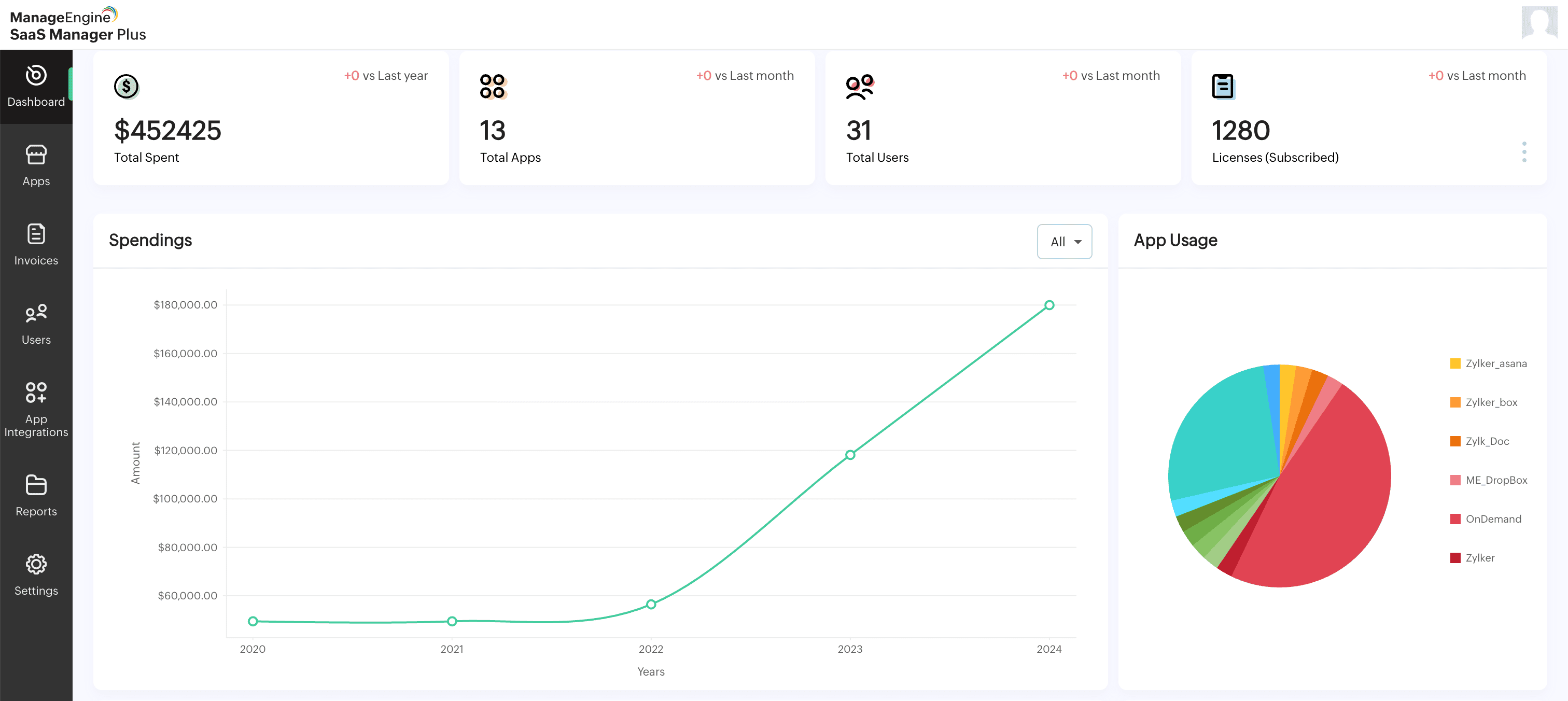
Track user activity, login frequency, and feature adoption to identify inactive or underutilized accounts. This helps teams make informed decisions about retaining or eliminating tools.
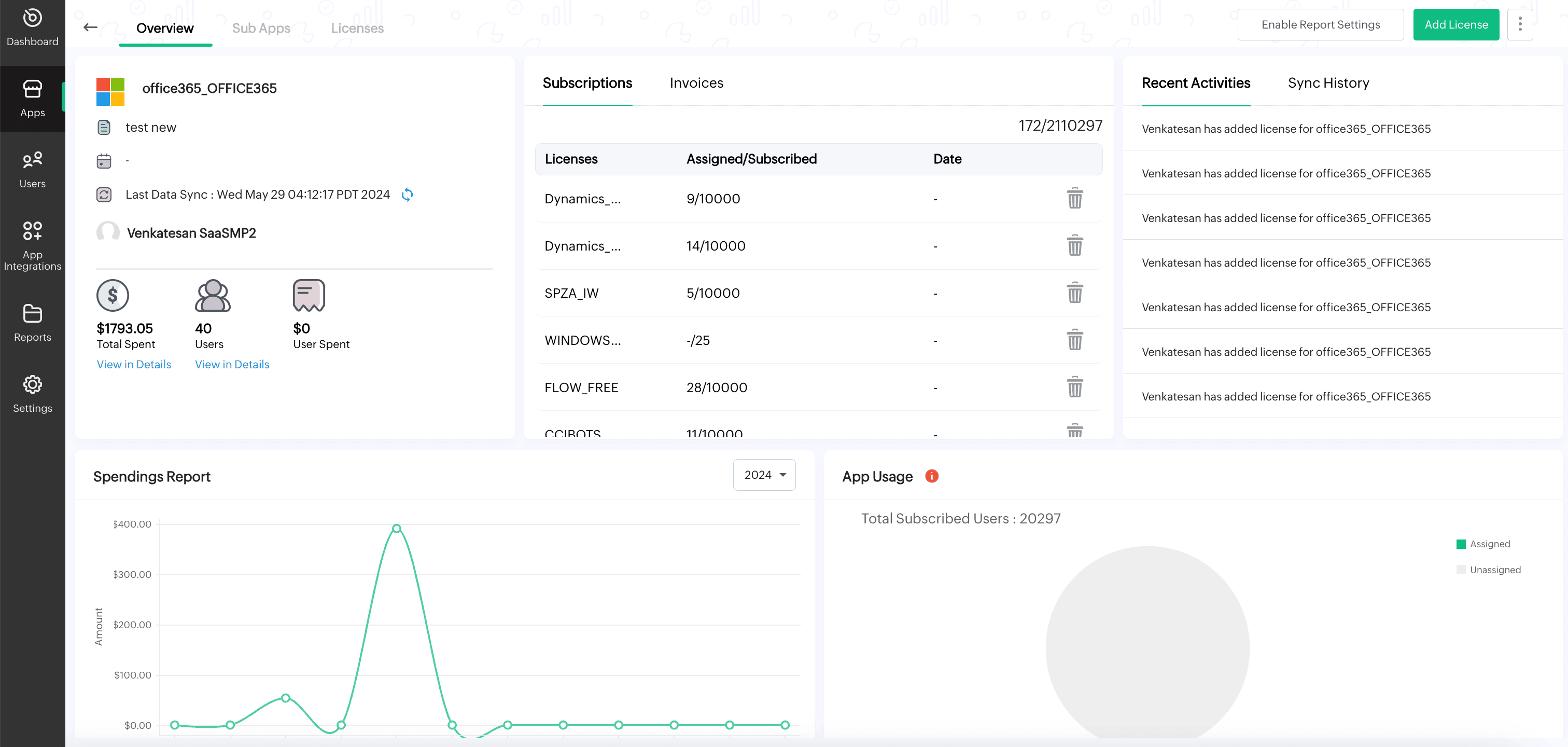
Identify unused or underutilized licenses and reassign or downgrade them. This directly reduces unnecessary SaaS spending and improves cost efficiency.
Monitor subscription renewal dates and receive timely alerts. This allows teams to review usage before renewal and avoid paying for tools that are no longer needed.
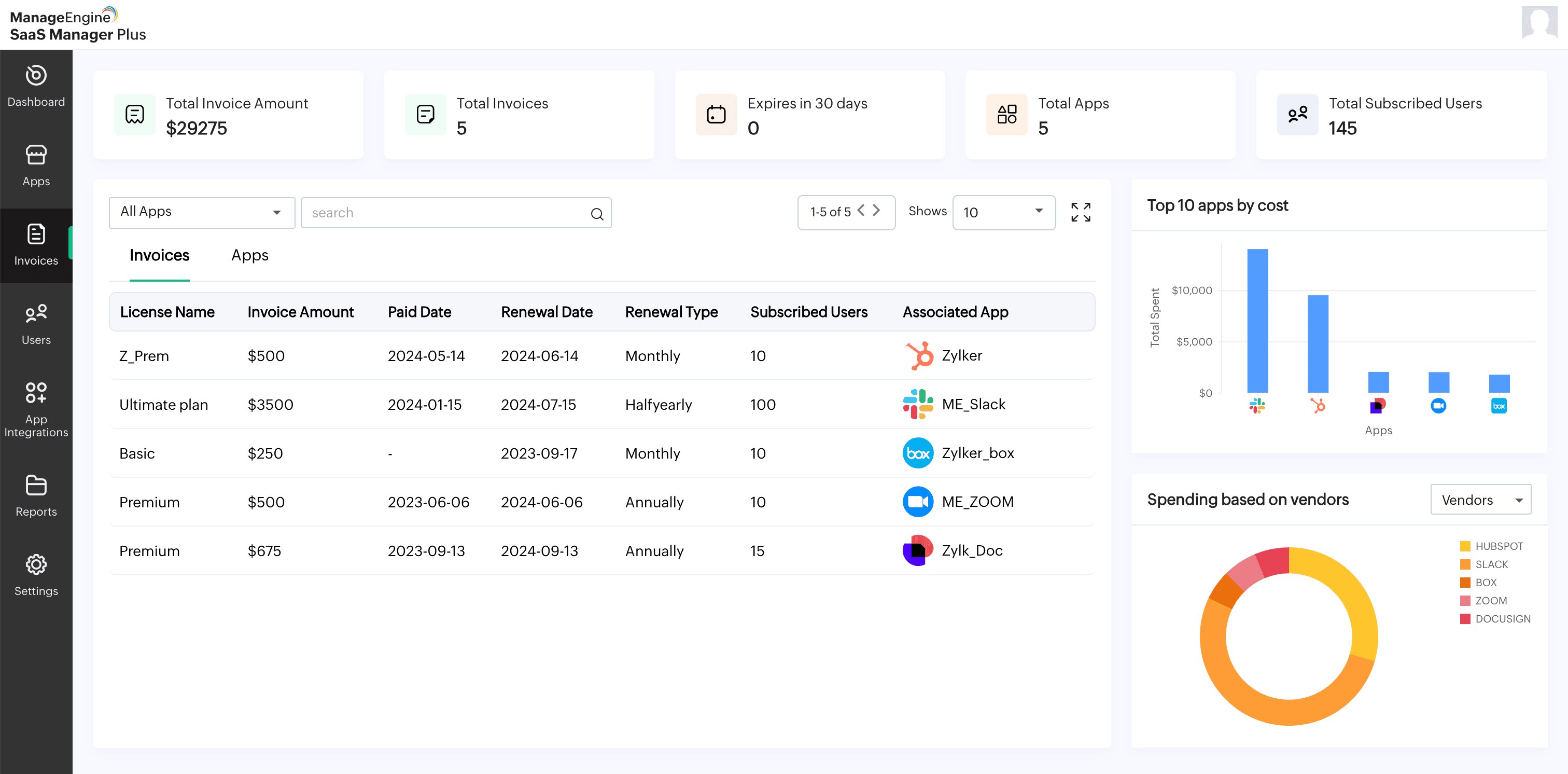
Maintain a real-time inventory of all SaaS applications, including ownership, users, pricing, and license details. This improves visibility and accountability across teams.
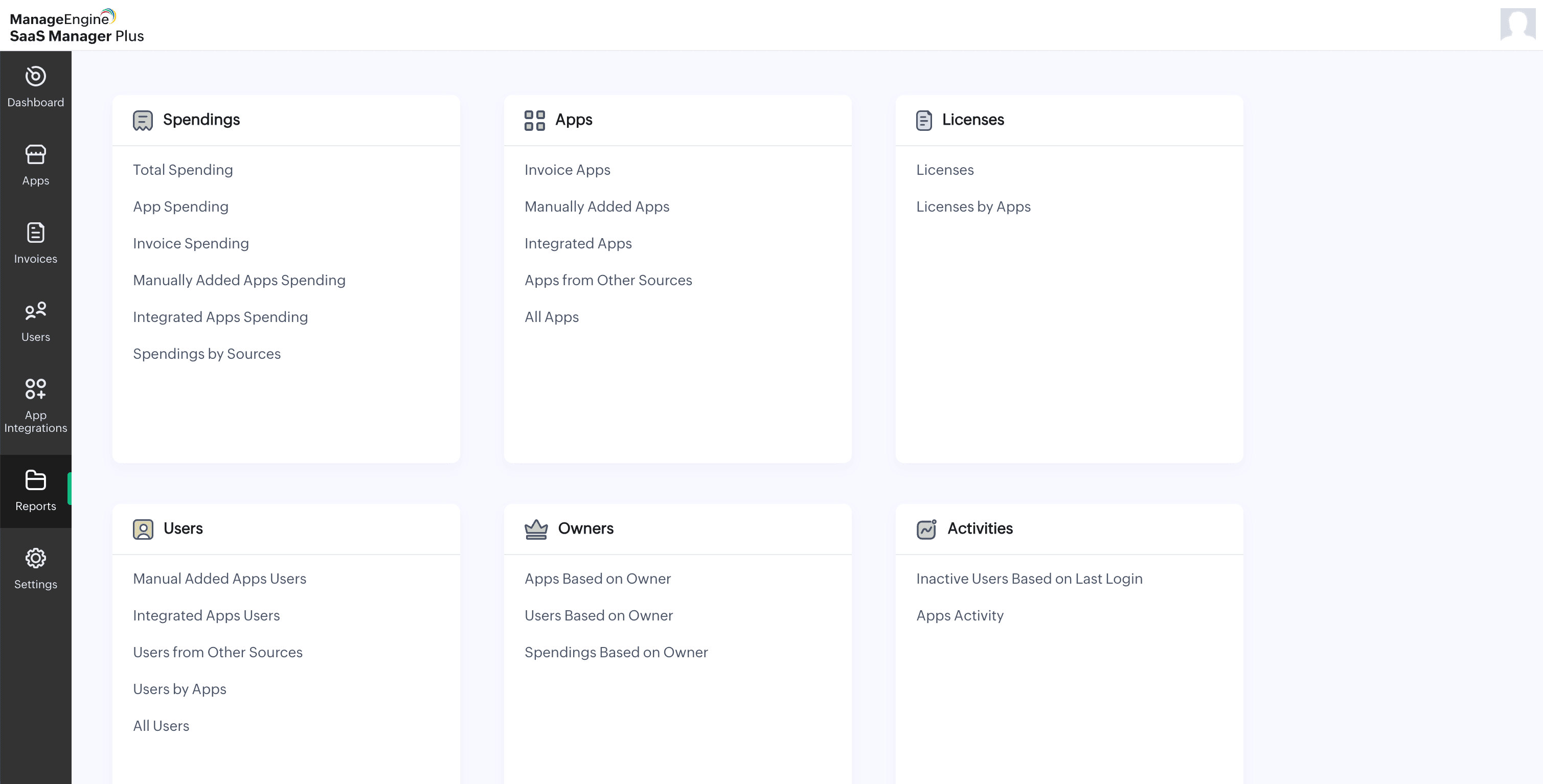
Get a clear breakdown of SaaS spend by department, application, or user. This helps finance and IT teams track budgets and identify areas for cost reduction.
A centralized dashboard gives a complete view of all SaaS applications, users, and costs. This eliminates blind spots and helps teams understand exactly what tools are being used and by whom.
By identifying unused licenses, redundant tools, and unnecessary renewals, organizations can significantly cut down on wasted SaaS spend and optimize budgets.
With better visibility and controlled access through onboarding and offboarding workflows, organizations reduce risks associated with unauthorized access and unmanaged applications.
Result: Instead of managing SaaS in silos, teams can operate with a structured, data-driven approach to life cycle management, improving efficiency, cost control, and governance.
Companies can ensure SaaS governance by implementing:
These measures help maintain visibility and control across the SaaS ecosystem.
Yes. Many SaaS life cycle management platforms detect shadow IT by analyzing:
This helps IT teams discover unauthorized applications used by employees.
Yes. Life cycle management reduces SaaS sprawl by:
This ensures organizations use only the tools that provide real value.
SaaS life cycle management improves security by:
These controls help reduce the risk of data breaches and unauthorized access.
Important integrations include:
These integrations enable automated onboarding, monitoring, and governance.
Key SaaS life cycle metrics include:
Tracking these metrics helps organizations optimize SaaS investments and improve efficiency.
